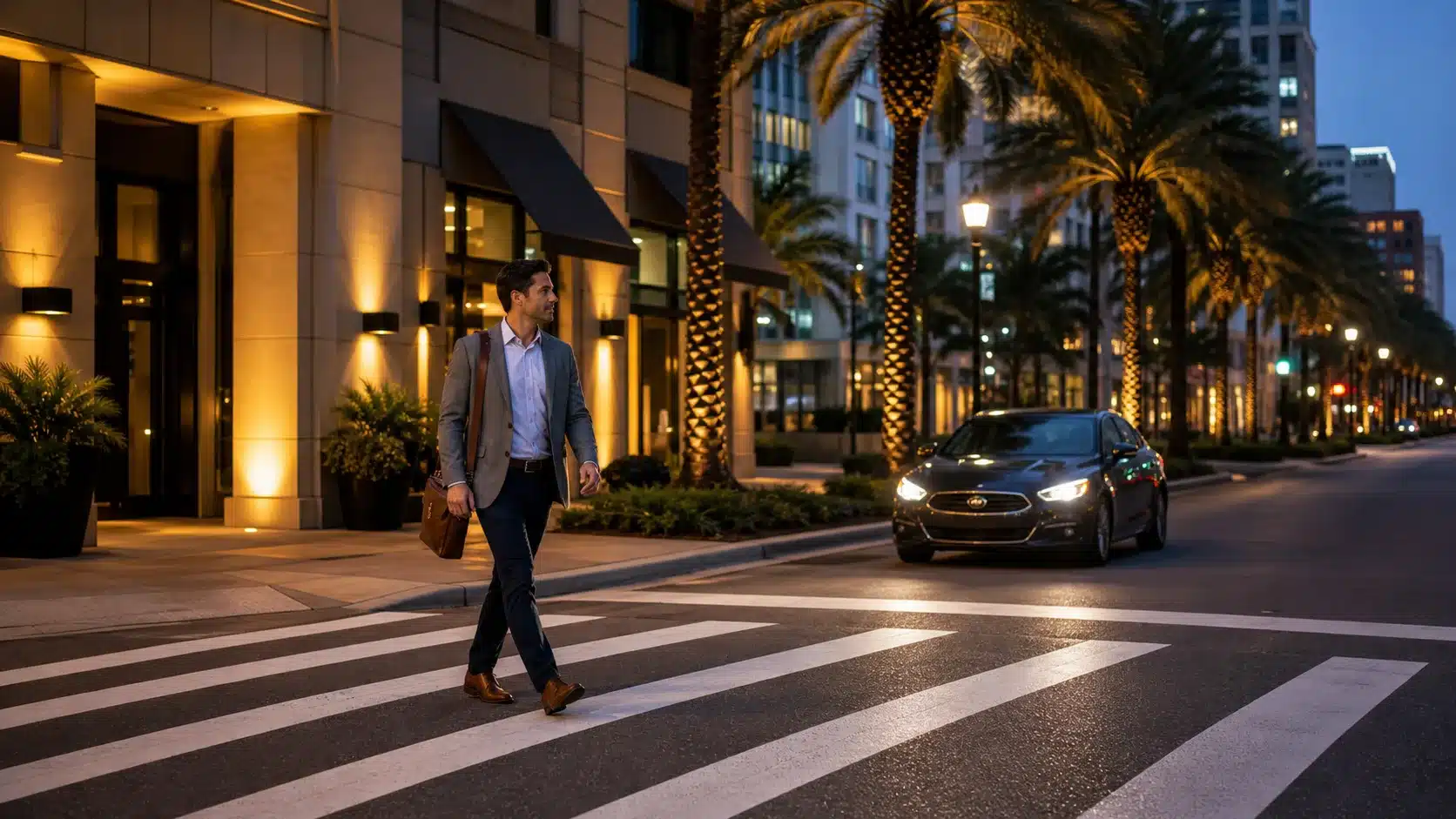
Darkness during Tampa’s November evenings can make a pedestrian crash more likely, but it does not excuse unsafe driving. After Daylight Saving Time ends, many people are still walking dogs, leaving work, exercising, heading to bus stops, or crossing streets when the sun has already set.
When a driver strikes someone in low light, the conditions at the scene may matter in an injury claim. We look at the full picture, including what the driver could see, what they should have noticed, and whether they changed their driving to match the darker conditions.
November Darkness Can Put Negligence in Clearer View
By mid-November, evening traffic often overlaps with holiday errands, school activities, dining, and other outings. That can create more risk around busy intersections, parking lots, entertainment areas, bus stops, and places where pedestrians cross after sunset.
A driver’s responsibility does not disappear because it is dark. In fact, reduced visibility should cause a careful driver to slow down, pay closer attention, leave more space between vehicles, and use headlights properly. A driver who continues at the same speed, looks at a phone, or fails to watch for people near the road may create evidence of negligence.
Darkness by itself does not prove who caused a crash. Still, it can help show that a driver should have taken added care and failed to do so. As a pedestrian accident lawyer in Tampa, we review the specific conditions present at the moment of impact, not just the fact that the collision happened after sunset.
How Low Visibility Can Support a Claim
Low-light crashes often come down to a simple but important question: What did the driver see, and what should a reasonably careful driver have seen? A driver may claim that a pedestrian “came out of nowhere,” but evidence may tell a different story.
Dangerous conduct after dark can include:
- Driving too fast for the lighting and traffic conditions
- Looking at a phone or becoming distracted inside the vehicle
- Failing to turn on headlights or driving with poorly working lights
- Driving while impaired
- Failing to yield at a marked or unmarked crosswalk
We may examine video from nearby businesses, traffic cameras, or dashcams before it is erased or recorded over. Police reports, witness accounts, vehicle data, weather records, sunset times, and photos from soon after the crash can also help show how visible the area was.
The crash location matters, too. A poorly lit intersection, faded crosswalk stripes, a blocked streetlight, hidden sign, or unsafe road design may point to concerns beyond one driver’s actions. Those details can call for a broader review of the roadway and the parties responsible for maintaining it.
Driver Duties Do Not Disappear After Sunset
Florida drivers must use reasonable care around pedestrians, especially when it is harder to see the road ahead. The posted speed limit is not always a safe speed for the conditions. A driver traveling at the limit may still be going too fast if darkness, glare, traffic, rain, or poor street lighting makes it harder to spot someone crossing.
Intersections and parking lot entrances require added attention. Drivers making turns may focus so closely on other cars that they miss a person in a crosswalk. Likewise, a motorist approaching a stopped vehicle, entering a driveway, or moving through an area with steady foot traffic should expect that pedestrians may be nearby.
Headlights can be a major issue in these cases. Proper lights help a driver see pedestrians, lane markings, traffic signals, and hazards farther ahead. If a driver failed to use headlights when needed, had defective lights, or used lights that did not properly illuminate the roadway, that information may be important in a negligence claim.
Pedestrian Actions and the Full Picture
Insurance companies often search for ways to place blame on the injured person. They may question whether the pedestrian used a crosswalk, followed a signal, wore dark clothing, entered the road unexpectedly, or looked at a phone. Those facts can be relevant, but they are not the end of the discussion.
Many Tampa streets leave pedestrians with limited safe choices. Sidewalks may stop without warning, crossings may be far apart, and lighting may be poor. A person walking near the roadway is not automatically responsible for a driver’s failure to slow down, yield, or stay alert.
When we evaluate fault, we consider all of the circumstances, including:
- The driver’s speed and attention before the crash
- Whether the pedestrian was visible from a reasonable distance
- The location of crosswalks, sidewalks, signals, and streetlights
- Whether the driver had enough time to brake or avoid impact
- Conditions that may have limited the pedestrian’s safe path
Even when a pedestrian made a mistake, a driver may still carry substantial responsibility. Florida injury claims depend on a careful review of each person’s actions and the conditions that led to the collision.
Protect Evidence Before Conditions Change
November conditions can look very different only days or weeks later. Streetlights may be repaired, construction barriers may move, camera footage may be deleted, and the timing of traffic can change. Preserving evidence early can make it easier to understand what happened.
Photos and video taken at the same time of evening may show sightlines, lighting gaps, crosswalk markings, traffic signals, landscaping, parked vehicles, and other obstructions. Prompt medical care and continued treatment can also document how the crash affected you physically, emotionally, and financially. Insurance adjusters may seek a recorded statement or quick settlement before the full impact of an injury is clear, so timely legal guidance can help protect important information.
A nighttime pedestrian crash may involve driver behavior, roadway conditions, visibility evidence, and multiple insurance issues, all of which deserve close attention.
After a serious collision, keeping records, saving photographs, and avoiding rushed decisions can help preserve your ability to pursue fair compensation.
Get Clear Legal Guidance for Your Next Steps
At Greco, Wozniak & Ruiz-Carus, P.A., we can discuss how a pedestrian accident lawyer in Tampa may help evaluate your claim and communicate with insurers. We will listen to your concerns and explain your legal options in straightforward terms. Contact us to schedule a consultation.