Protect Your Family During Tampa’s Thanksgiving Rush
Thanksgiving week puts more vehicles on Tampa roads, including family cars, airport travelers, shoppers, tourists, and commercial trucks carrying holiday goods. This year, Thanksgiving falls on November 26, so the days before and after the holiday may bring especially heavy traffic on major routes.
Tampa’s highways, Port Tampa Bay activity, warehouse routes, and delivery schedules can put passenger vehicles beside heavily loaded tractor-trailers. More truck traffic does not mean a crash will happen, but it can raise the chance of congestion, rushed decisions, short following distances, and tired drivers. We want families to understand the risks, take sensible precautions, and know what may matter if a serious crash occurs.
Freight Deadlines Can Lead to Unsafe Driving
Thanksgiving creates a busy delivery season for grocery stores, restaurants, retailers, and distribution centers. Food, consumer goods, and holiday inventory must often arrive within narrow delivery windows. That pressure can affect not only truck drivers, but also trucking companies, dispatchers, brokers, cargo handlers, and others involved in moving a shipment.
Fatigue is one major concern. Federal rules limit driving hours and require rest periods, but a rule on paper does not always prevent unsafe pressure in the real world. Unrealistic schedules, inaccurate logs, skipped breaks, or demands to keep moving can leave a driver too tired to react safely.
A fatigued driver may have trouble spotting a slowing vehicle, judging distance, or controlling a large truck during a sudden lane change. Other holiday freight risks may include:
- Speeding to meet a delivery deadline
- Distraction from GPS, dispatch messages, or phone use
- Overloaded trailers or cargo that was not secured correctly
- Worn tires, brake problems, lighting failures, or missed maintenance
- Aggressive merging around crowded exits and interchanges
We often encourage drivers to give commercial trucks extra room, especially on I-4, I-75, I-275, the Selmon Expressway, and routes connected to Port Tampa Bay and regional warehouses. Avoid lingering beside a truck in its blind spot, leave space before merging, and allow more travel time than usual. Safe choices by passenger vehicle drivers can reduce risk, but truck drivers and motor carriers still have a duty to operate their vehicles safely.
What to Do After a Tampa Semi-Truck Crash
A collision with a commercial truck can be frightening and confusing. Your first focus should be safety. If possible, move away from traffic, call law enforcement, and seek emergency medical care. Pain may not be obvious right away because adrenaline can hide symptoms after a traumatic event.
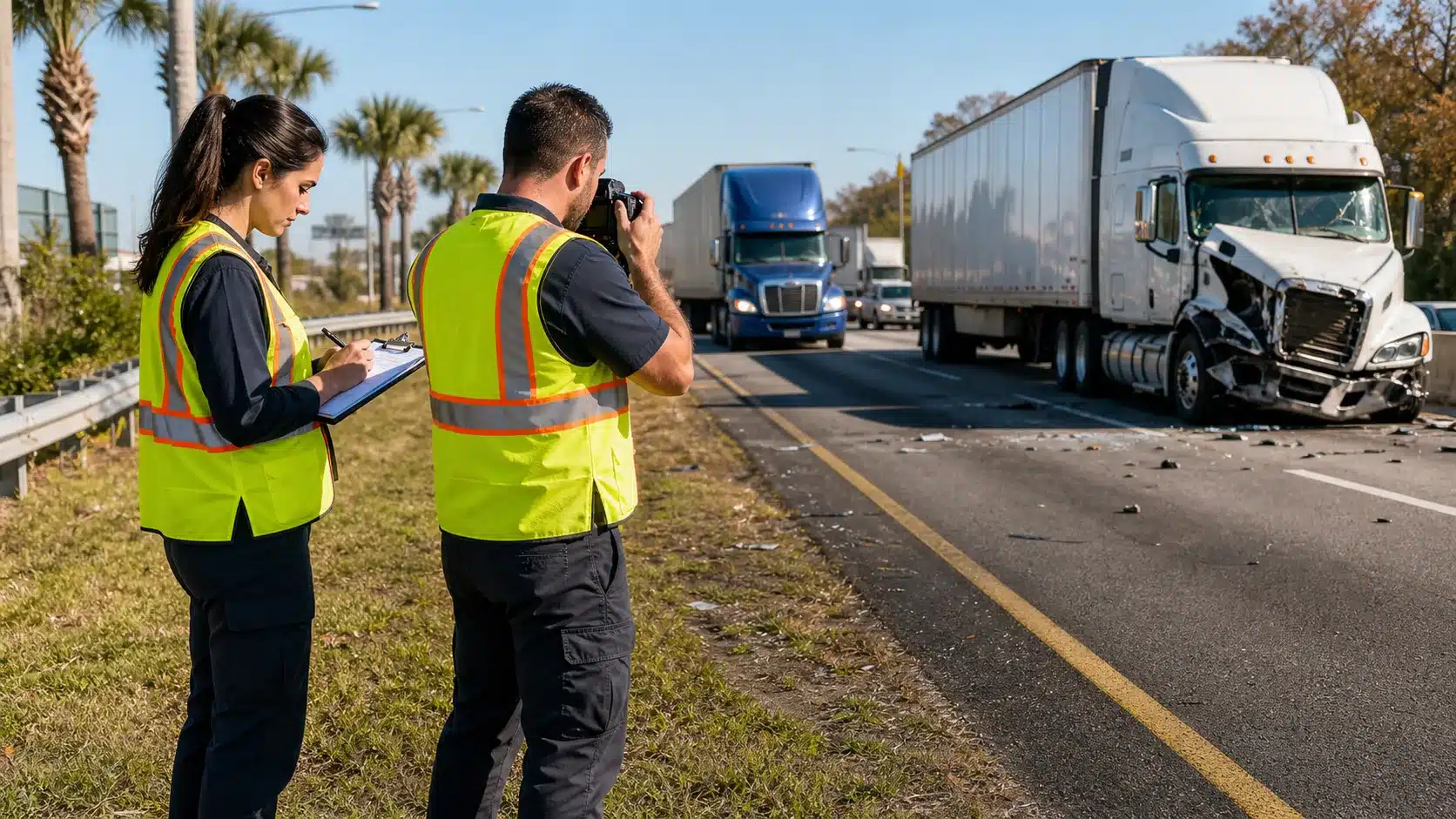
When it is safe, preserving basic information at the scene can be helpful. You do not need to investigate the crash yourself or argue with anyone about fault. Instead, focus on collecting details that may be hard to find later, such as:
- Photos of vehicle damage, the roadway, skid marks, and traffic signals
- The truck’s company name, trailer number, license plate, and visible markings
- Photos of visible cargo or equipment, if it can be done safely
- Names and contact information for witnesses
- The responding agency and report number
Afterward, follow your medical provider’s recommendations and keep records connected to the crash. Appointment notes, bills, prescriptions, missed work, symptom changes, repair estimates, and insurance communications can help show how the collision affected your life.
Truck crash claims are often different from ordinary car accident claims. A commercial carrier may have several insurance policies, corporate representatives, and investigators working soon after the crash. Before agreeing to a quick settlement or recorded statement, it may help to speak with a semi-truck accident attorney about the situation and the information that should be protected.
Evidence Can Make a Difference in a Truck Claim
Truck accident cases can turn on evidence that is controlled by the trucking company or another business. Electronic logging data may show how long a driver was on duty. Dispatch messages can reveal delivery pressure. Maintenance files may show whether a truck had known mechanical issues before the collision.
Other useful records may include driver qualification files, inspection reports, cargo documents, onboard camera footage, and electronic control module data. These materials can help us examine whether fatigue, unsafe driving, poor maintenance, unsecured cargo, or company practices played a part in the crash.
Time matters because some records may be overwritten, deleted, or lost during regular business operations. A truck may also return to service quickly after a Thanksgiving delivery. A semi-truck accident attorney can send preservation requests to parties who may hold relevant evidence and can begin an independent review of the facts.
Depending on the circumstances, that review may include examining the crash scene, studying vehicle damage, speaking with witnesses, reviewing safety records, and consulting accident reconstruction professionals. Our goal is to build a clear, fact-based account rather than relying only on the trucking company’s explanation.
More Than One Party May Be Responsible
The truck driver is not always the only person or company that may share responsibility. A motor carrier may need to answer questions about hiring, training, supervision, scheduling, maintenance, and safety policies. The company that owns the truck, employs the driver, or controls the shipment may also be part of the investigation.
Other parties may matter as well. Improperly loaded freight can affect a truck’s balance and stopping ability. A maintenance provider may be involved if brakes, tires, lights, or other equipment were not serviced correctly. When a defective vehicle part may have contributed, the manufacturer may need to be investigated.
Florida’s comparative negligence rules can also become part of the discussion. An insurer may claim that an injured driver was partly at fault because of speed, following distance, or a lane change. Those claims can affect recovery, which is why witness accounts, physical evidence, and careful record review are so important.
A thorough case review should look beyond the driver alone. Serious truck crashes can cause lasting injuries, missed income, rehabilitation needs, property damage, pain and suffering, and, in the most heartbreaking situations, wrongful death losses under Florida law.
Protect Information Before It Disappears
Thanksgiving travel should be about time with family, not dealing with the aftermath of a commercial vehicle collision. If a crash happens, prioritize medical care, preserve what information you can safely gather, and keep records of how the injury has affected your daily life.
Early action can help protect evidence before a truck returns to service, digital records are overwritten, or witnesses become harder to locate. Understanding these issues can help injured people recognize why prompt documentation and evidence preservation are important after a commercial truck collision.
Get Guidance for Your Truck Accident Claim
At Greco, Wozniak & Ruiz-Carus, P.A., we can help you understand the legal options available after a serious commercial vehicle crash. Speak with a semi-truck accident attorney about the facts of your case and the compensation you may be able to pursue. Contact us to discuss your claim with our team.