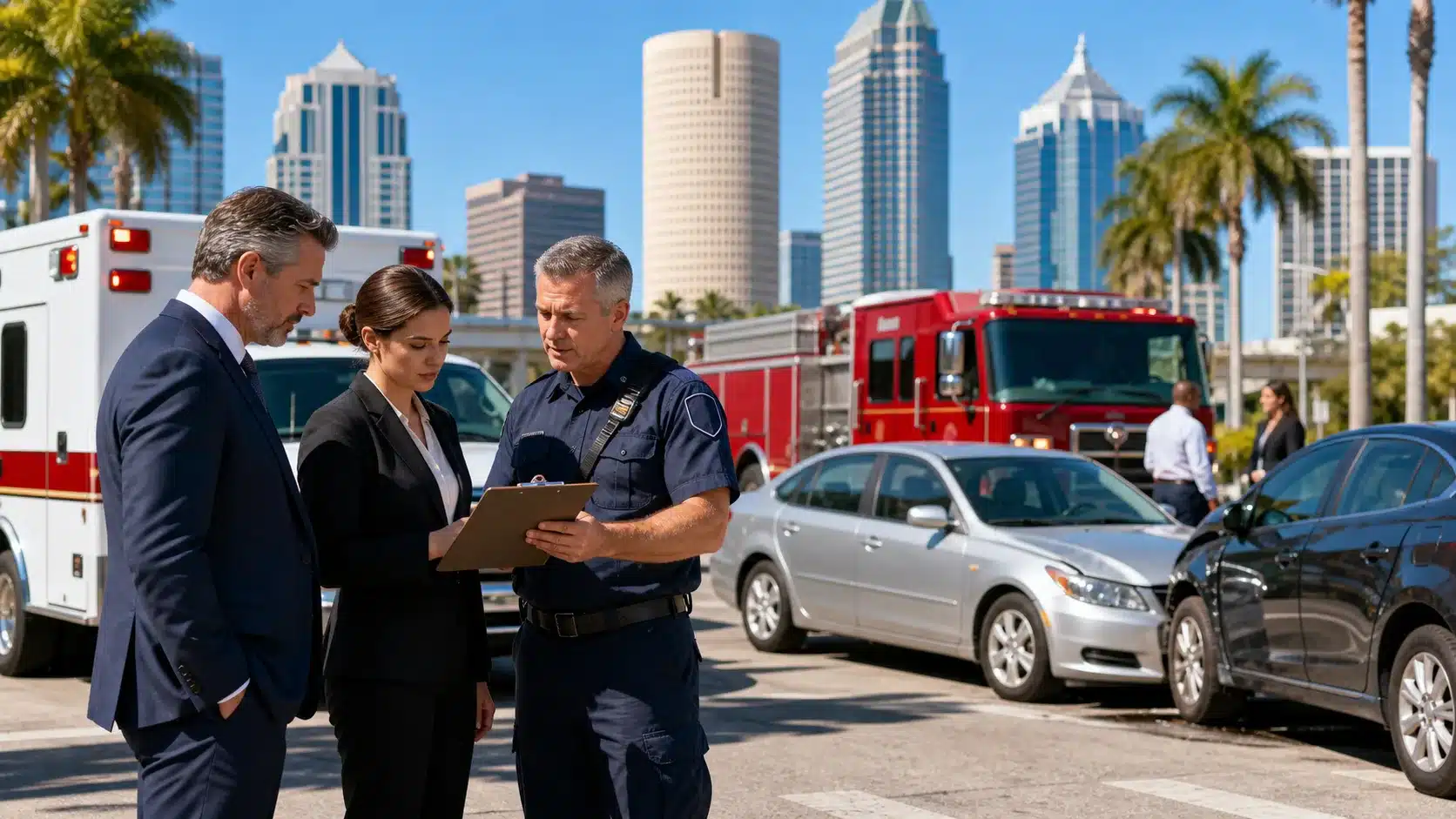
When Sirens Lead to Crashes: Your Rights After a 911 Response
Emergency sirens are part of everyday life around Tampa Bay. During fall events, football games, back-to-school traffic, and the long holiday stretch, we see ambulances, fire trucks, and police cars racing through crowded streets at all hours.
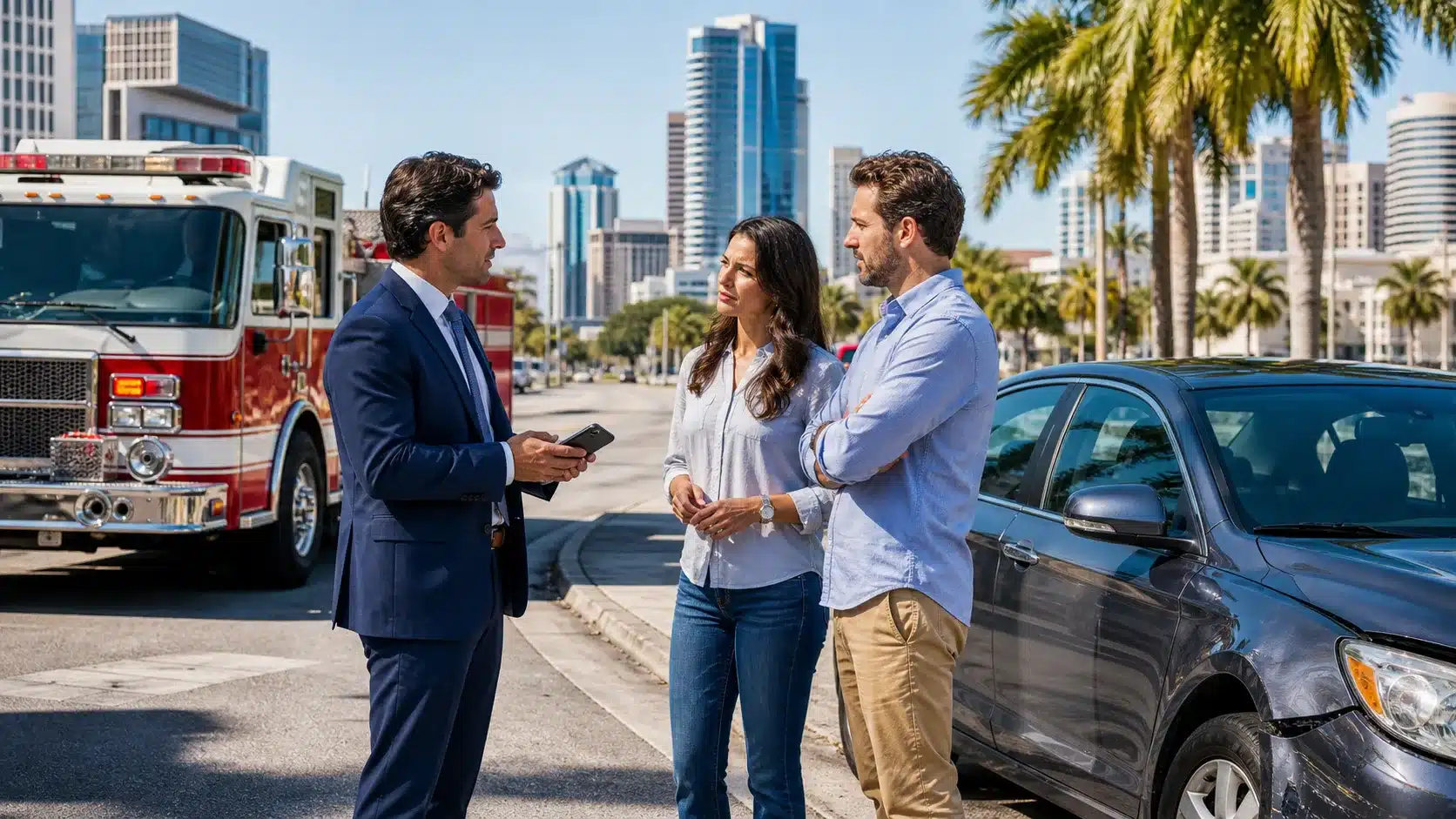
Those fast responses can save lives, but they can also create danger. High speeds, running red lights, and sudden lane changes can cause serious crashes with drivers, passengers, pedestrians, and cyclists who are just going about their day. One moment you are in normal traffic, the next you are hit and wondering what just happened.
Many people think they have no rights if they are hurt by a vehicle that was answering a 911 call. They feel guilty, confused, or scared to speak up against a city, county, or private company. Florida law does give emergency vehicles special rules, but it also protects people who are harmed when those rules are ignored or pushed too far. This article walks through how that works and what you should know if you are in this kind of crash.
How Florida Law Treats Emergency Vehicle Crashes
Florida law gives emergency vehicles certain privileges while they respond to calls. When lights and sirens are on, they can do things that regular drivers cannot, such as:
- Exceed the posted speed limit if they use due care
- Drive through red lights or stop signs after slowing down as needed for safety
- Use lanes in a different way, including quick lane changes or turning from unusual positions
- Park or stop in places where other drivers are not allowed during normal driving
But these privileges are not a free pass. The law expects drivers of emergency vehicles to act with what it calls “due regard” for the safety of others on the road. That means they cannot act with reckless disregard for others, even during an urgent response.
When the vehicle belongs to a city, county, or state agency, another layer comes into play: sovereign immunity. In plain terms, that is a legal concept that limits when and how you can bring a claim against a government body. It can mean:
- Certain damage caps on how much you can recover
- Special notice rules for warning the agency that you plan to bring a claim
- Different timelines than you would have in a claim against a private driver
Even with sovereign immunity, a government agency can still be held responsible when their employees act negligently or with reckless disregard. In real life, that can look like:
- Speeding through an intersection with no clear view and no slowing
- Failing to use lights or sirens when breaking normal traffic rules
- Passing stopped cars in a way that gives other drivers no safe way to avoid a crash
Private ambulance companies and other private responders are not protected by sovereign immunity in the same way. They can be held responsible like any other company when their drivers act carelessly.
Untangling Liability in Tampa Emergency Response Collisions
Liability in an emergency vehicle crash is often more tangled than in a regular car accident. There can be several people or entities that share blame, such as:
- The emergency vehicle driver who made a risky decision
- The city, county, or state agency that owns the vehicle and employs the driver
- A private ambulance or medical transport company
- Another driver who cut off the emergency vehicle or blocked the path
- A road contractor or property owner if bad road design or poor markings played a role
Common crash patterns we see include:
- Multi-car pileups at busy intersections when an emergency vehicle runs a red light and several cars collide
- Side-swipe crashes during sudden lane changes when drivers do not have time or room to react
- Pedestrians or cyclists hit in crosswalks when traffic moves for a siren and someone is hidden in a blind spot
- Rideshare or delivery drivers who move quickly out of a lane to clear a path and end up striking another car or person
Because so many factors can be at play, early investigation is key. Helpful evidence can include:
- Dashcam footage from any vehicle involved
- Traffic camera or security camera video from nearby businesses
- 911 recordings and dispatch logs that show timing and route
- Photos of the scene, skid marks, and damage patterns
- Witness statements, taken soon after the crash while memories are fresh
Without fast action, much of this evidence can disappear. Cameras record over old footage, vehicles are repaired or scrapped, and small details fade from memory. That is why getting help early matters in these cases.
Why You Need an Emergency Vehicle Accident Attorney
Emergency vehicle crashes are not simple fender benders. You may be dealing with serious injuries, a family member’s wrongful death, or long-term medical needs that change your daily life. On top of that, you are suddenly facing government regulations, insurance companies, and legal terms that feel confusing.
An experienced emergency vehicle accident attorney steps in to handle that stress so you can focus on healing. In these cases, a skilled legal team can:
- Review whether sovereign immunity applies and how it affects your claim
- Track strict notice deadlines and filing rules for public entities
- Sort through multiple insurance policies, including government and private coverage
- Work with accident reconstruction experts to explain how the crash happened
- Coordinate with medical professionals to understand your injuries and long-term needs
At our Tampa-based firm, we know how local agencies operate and how busy Hillsborough County roads get during fall festivals, sports events, tourist weekends, and holiday travel. That local knowledge helps us understand where cameras might be, which roads are trouble spots, and how to build clear, strong cases for people who have been badly hurt.
Steps to Protect Your Claim After a Siren-Related Crash
Right after a crash involving an emergency vehicle, your safety comes first. As soon as you are able, there are some steps that can help protect your health and any future claim:
- Call 911, even if emergency vehicles are already on scene, so there is an official record
- Get medical care right away, even for pain that seems minor at first
- Take photos and videos of the scene, your injuries, and damage to all vehicles
- Collect names and contact details for witnesses, including passengers and bystanders
- Keep your vehicle in its damaged state until an attorney advises about inspections
One of the biggest mistakes people make is giving a recorded statement to an insurance adjuster or a government risk manager too soon. They may sound friendly, but their job is to limit how much their side pays. A few poorly chosen words can be used later to shift blame onto you or downplay your injuries.
Florida also has deadlines for bringing injury and wrongful death claims. When a public agency is involved, there are special notice rules that can require action earlier than you might expect. Delays are common when life gets busy with school schedules, work, and fall holidays, but waiting too long can weaken your case or even block it completely.
An emergency vehicle accident attorney can guide you on what to say, what not to sign, and how to move forward without missing important time limits.
Take the Next Step Toward Clarity and Compensation
If you or someone you love has been hurt in a crash involving a police car, fire truck, ambulance, or other emergency response vehicle in the Tampa area, it is normal to feel overwhelmed. You may be dealing with pain, medical bills, missed work, and questions about what happened and who is responsible.
Greco, Wozniak & Ruiz-Carus, P.A. focuses on serious injury, medical malpractice, and wrongful death cases for people across Florida. Our attorneys bring many years of experience handling complex claims and have secured significant jury verdicts for injured clients. Having local counsel who understands the roads, agencies, and courts in and around Hillsborough County can make a real difference when the stakes are high and the other side has strong resources.
Protect Your Rights After an Emergency Vehicle Crash
If you were injured in a collision involving a police car, ambulance, or fire truck, you do not have to navigate the legal and insurance issues alone. At Greco, Wozniak & Ruiz-Carus, P.A., we carefully investigate what happened, explain your options, and fight to pursue the compensation you deserve. Speak with an experienced emergency vehicle accident attorney from our team to get clear guidance on your next steps. To schedule a consultation, contact us today.